
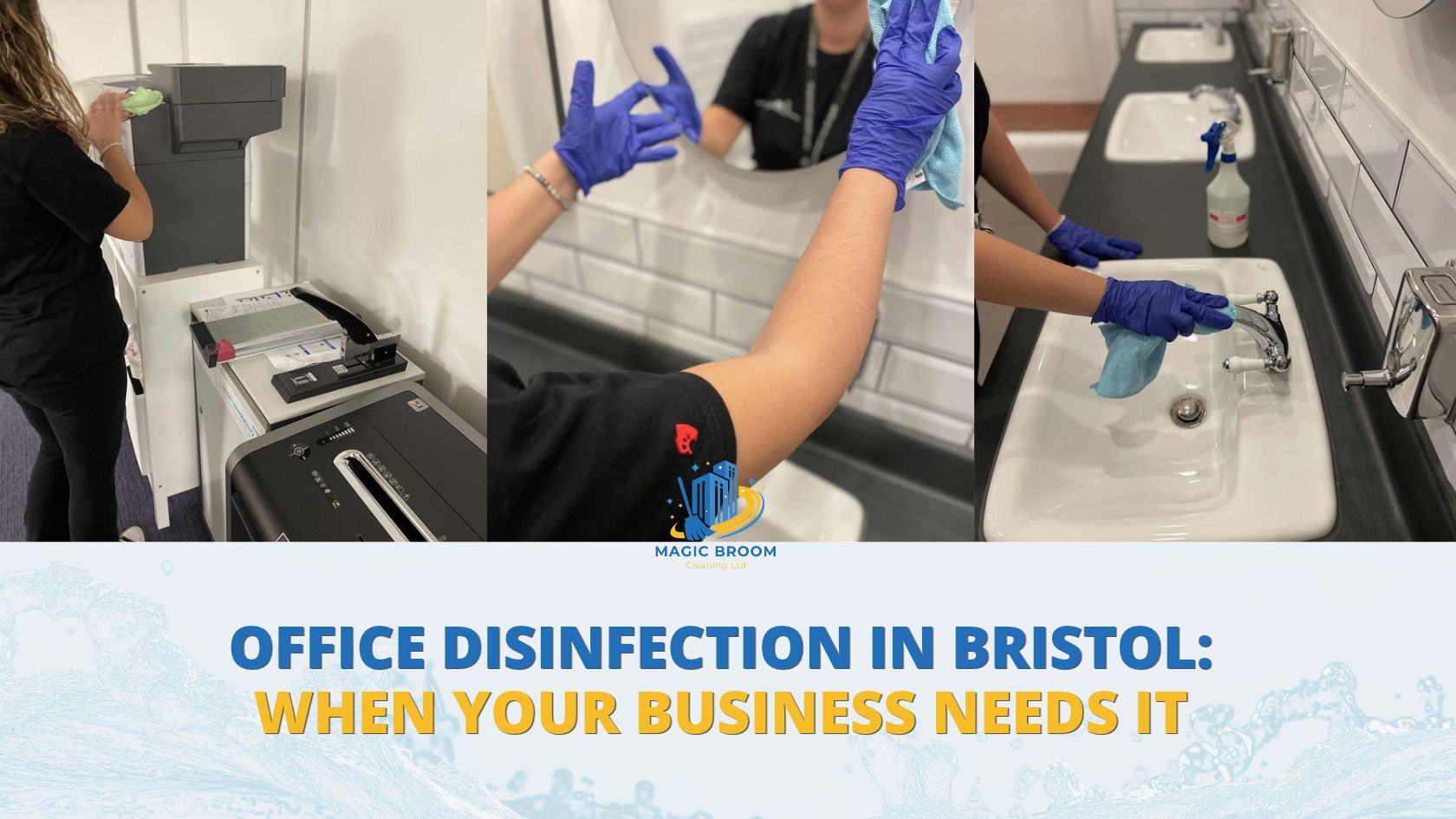
A thorough clean keeps most offices in good shape. Routine cleaning removes dirt and most germs from everyday surfaces. Some moments call for more, such as after a confirmed case in the building or before an event where people need extra reassurance. That is where office disinfection in Bristol comes in: a planned step with products tested against viruses, added on top of a proper clean. Here are the points every Bristol workplace manager should know.
- Tested products
- Cleaning vs disinfecting
- When to book
- Our service
- Ozone Treatment
- What disinfection can’t promise
- FAQs
1. Antiviral sanitisation means tested products
Antiviral sanitisation is disinfection with products tested to reduce viruses on surfaces. The word that matters is “tested”. Check the product’s label or safety data sheet for the standard it was tested to. In the UK, one common virucidal test is EN 14476. It measures how well a disinfectant reduces infectious viruses under controlled laboratory conditions, and a pass means the virus count falls by at least 99.99%.
That is a lab result. How well it works in your building depends on using the product correctly, every time.
2. Cleaning and disinfecting are not the same
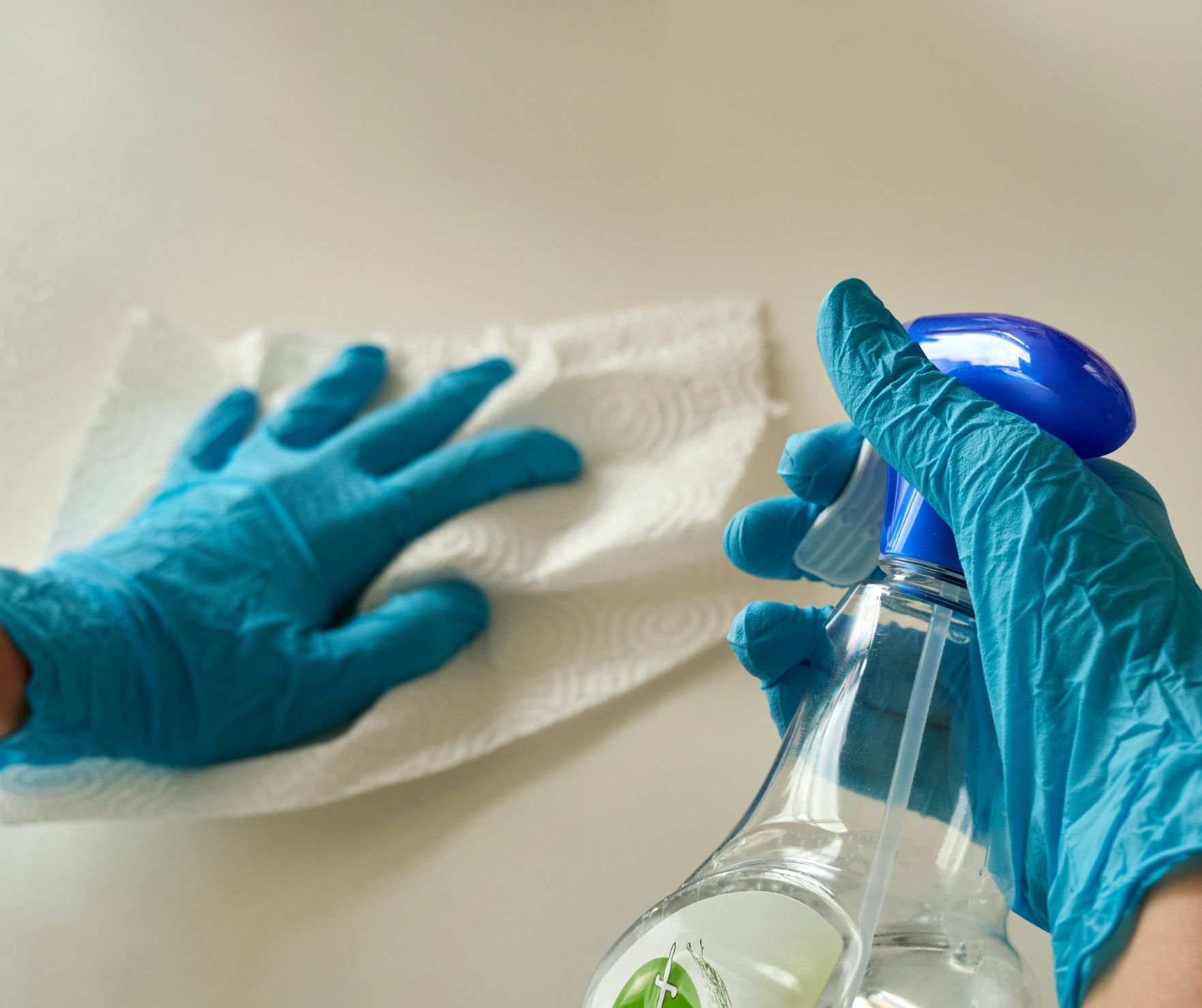
Cleaning removes dirt, grease and germs, usually with detergent and water. Disinfection uses a chemical to kill or inactivate germs, and it needs contact time: the product has to stay wet on the surface for the time stated on the label. Wiping a surface and moving on is cleaning, not disinfection.
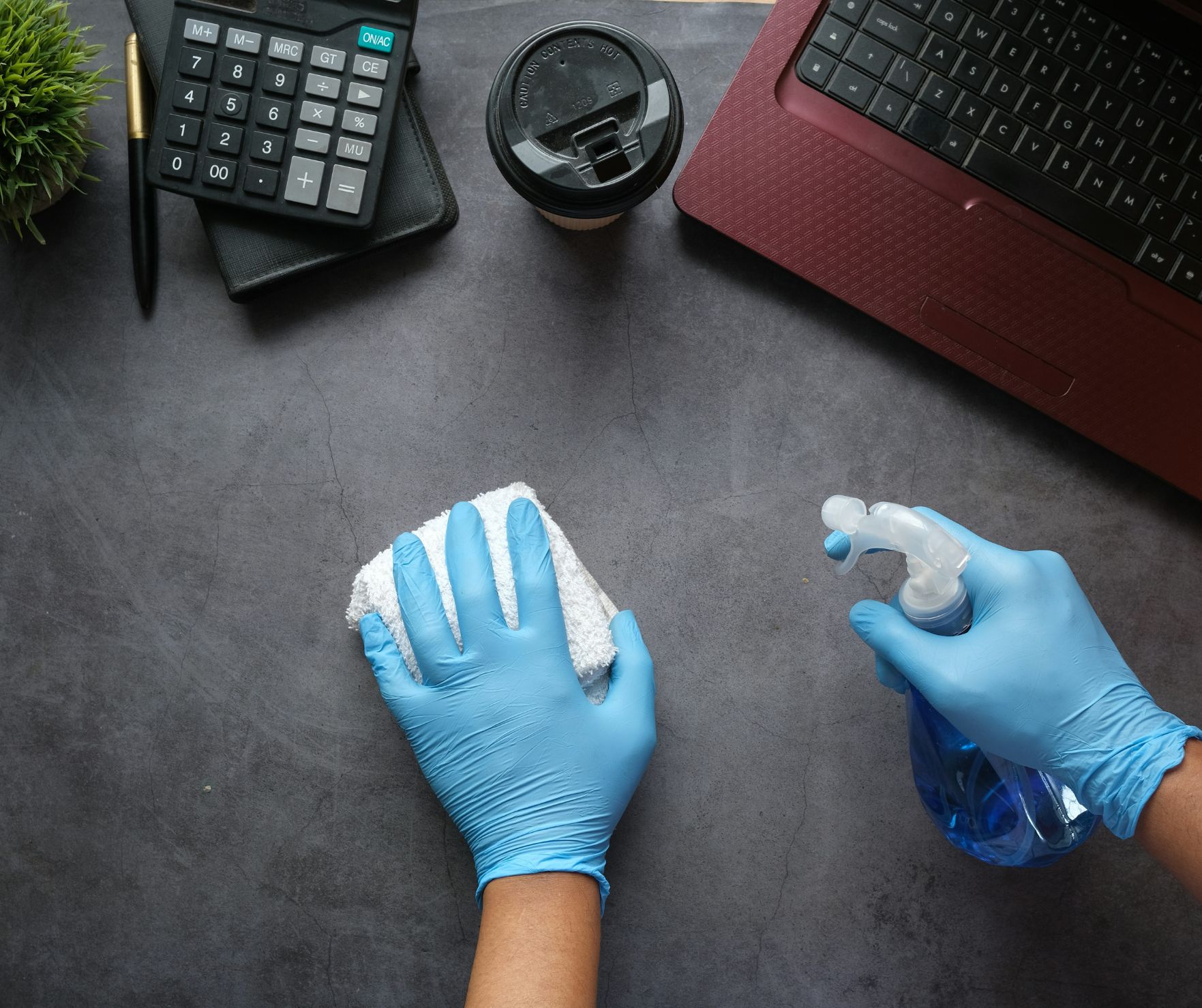
Government guidance on COVID-19 decontamination, now archived, told organisations to follow the manufacturer’s instructions for dilution, application and contact times. It also said that keeping indoor spaces well ventilated is one of the most important ways to reduce the spread of infection. Disinfection supports ventilation; it doesn’t replace it. You can read the archived GOV.UK guidance here.
3. When to book office disinfection in Bristol
- After a confirmed or suspected case in the workplace
- Before a high-profile event, or a return to the office after a shutdown
- In shared spaces where people are close together and touch the same things, such as reception, lifts, handrails and meeting rooms
- Where staff or visitors are more vulnerable to infection
4. Our office disinfection service
Our antiviral sanitisation service in Bristol starts with a full clean to remove dirt and dust, because a disinfectant can’t work properly through a layer of grime. We then treat all surfaces and give extra attention to key touchpoints. Before we start, we agree which areas need treating and how long they will be out of use.
Desks, keyboards, door handles, lift buttons and shared equipment are usually the first priority, because many people touch them every day. Where people are still working in the building, we plan the work around their shifts, so nobody is in the room while products are on the surfaces. Ventilation matters too: opening windows where it is safe to do so helps clear product fumes before people return.
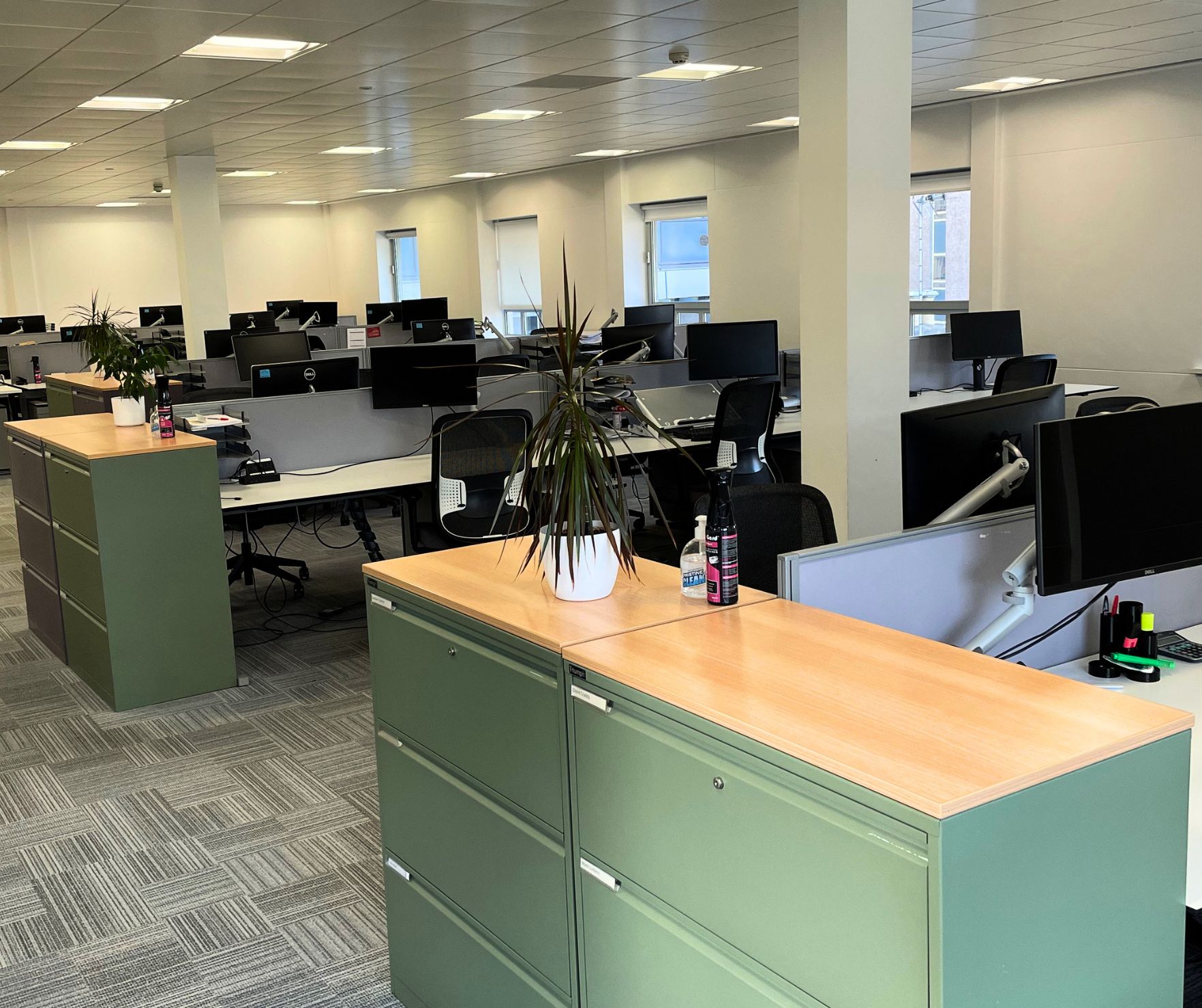
Once the work is done, you receive the checklist of treated areas. Keep it with your cleaning records, so you can show staff, tenants or an inspector what was done and when. If something is missed or a surface looks damaged, tell us straight away and we will put it right on the next visit.
It also helps to plan ahead. A short call to agree the areas, the timing and any access rules is usually enough, so the visit runs smoothly and the space is back in use once the contact time has passed.
5. Ozone Treatment: a different option
Ozone Treatment is a separate service and works in a different way. Ozone (O₃) is an oxidising gas. A professional generator fills a sealed, empty room in a timed cycle, and the gas reaches the air and exposed surfaces, including fabrics, carpets and ventilation ducts that are hard to wipe by hand. Afterwards, the ozone turns back into oxygen and leaves no chemical residue.
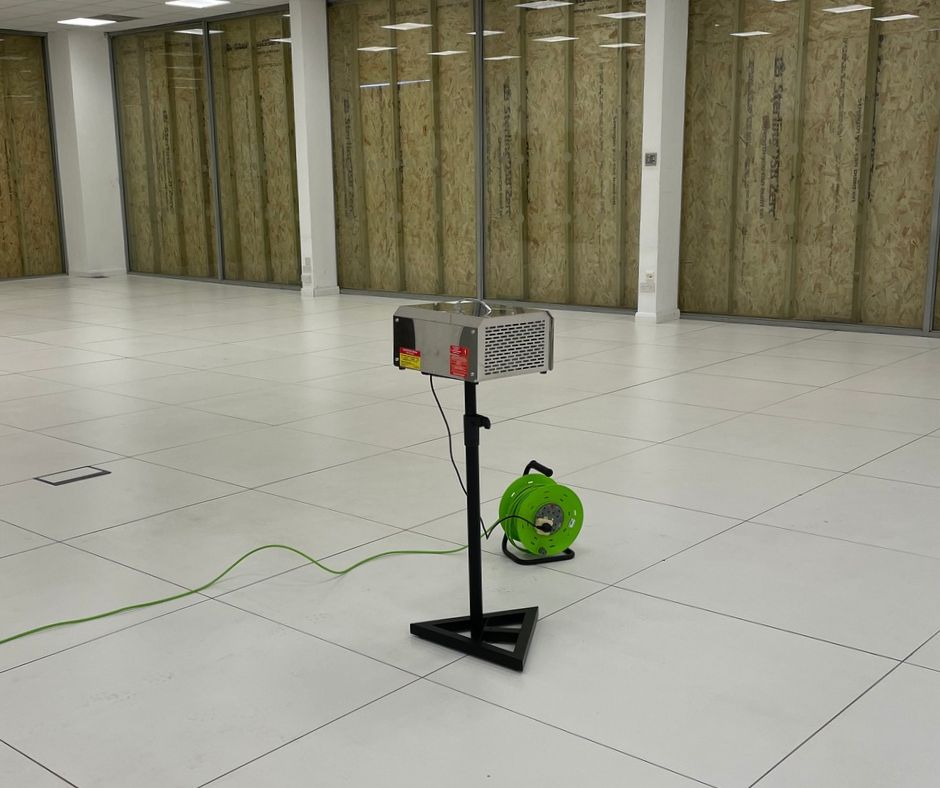
Ozone is never used while people are in the room. Our trained operatives carry out a risk assessment, seal the space, run the cycle out of hours, then ventilate the room and confirm it is safe to go back in. Because it is a dry process, it is kinder to paperwork and electronics than wet mists. It also helps with stubborn odours, and after water damage it can help control mould once any visible mould has been cleaned away.
Like antiviral sanitisation, Ozone Treatment supports regular cleaning rather than replacing it, and it works best on surfaces that have already been cleaned. Our Ozone Treatment page explains the service, and our Ozone Treatment blog post covers it in more detail.
6. What disinfection can’t promise
Disinfection lowers risk. It doesn’t make a building germ-free, and it doesn’t replace ventilation, hand hygiene or staying at home when unwell. Be wary of any supplier who promises “100% safety” or quotes a precise percentage without test data. Ask for the product name, the standard it was tested against, and its safety data sheet. A reputable provider will have all three. If you are unsure what your building needs, a short site visit is the simplest way to find out, and it gives you a fair basis for comparing providers.
7. Frequently asked questions
Is antiviral sanitisation the same as normal cleaning?
No. Normal cleaning removes dirt and most germs. Antiviral sanitisation adds a disinfection step with a product tested against viruses, and it needs proper contact time to work.
How long does the effect last?
Disinfection acts on the germs present at the time it’s done. Surfaces can become contaminated again straight away, so it works best alongside regular cleaning and good ventilation.
Does the office need to be empty?
The areas being treated do. We plan the work around your shifts, so nobody is in the room while products are on the surfaces, and we agree beforehand which areas will be out of use and for how long. Ozone Treatment always needs a sealed, empty room.
What records do we get afterwards?
You receive a checklist of the areas we treated. Keep it with your cleaning records, so you can show staff, tenants or an inspector what was done and when.
Ready to talk through office disinfection for your building? Call us on 0117 299 3224 or request a free, no-obligation quote.


